



 18 / 50

A D V A N C E D M A T E R I A L S & P R O C E S S E S | A P R I L 2 0 1 7
1 8
for a low-cost turbocharger compressor
housing.
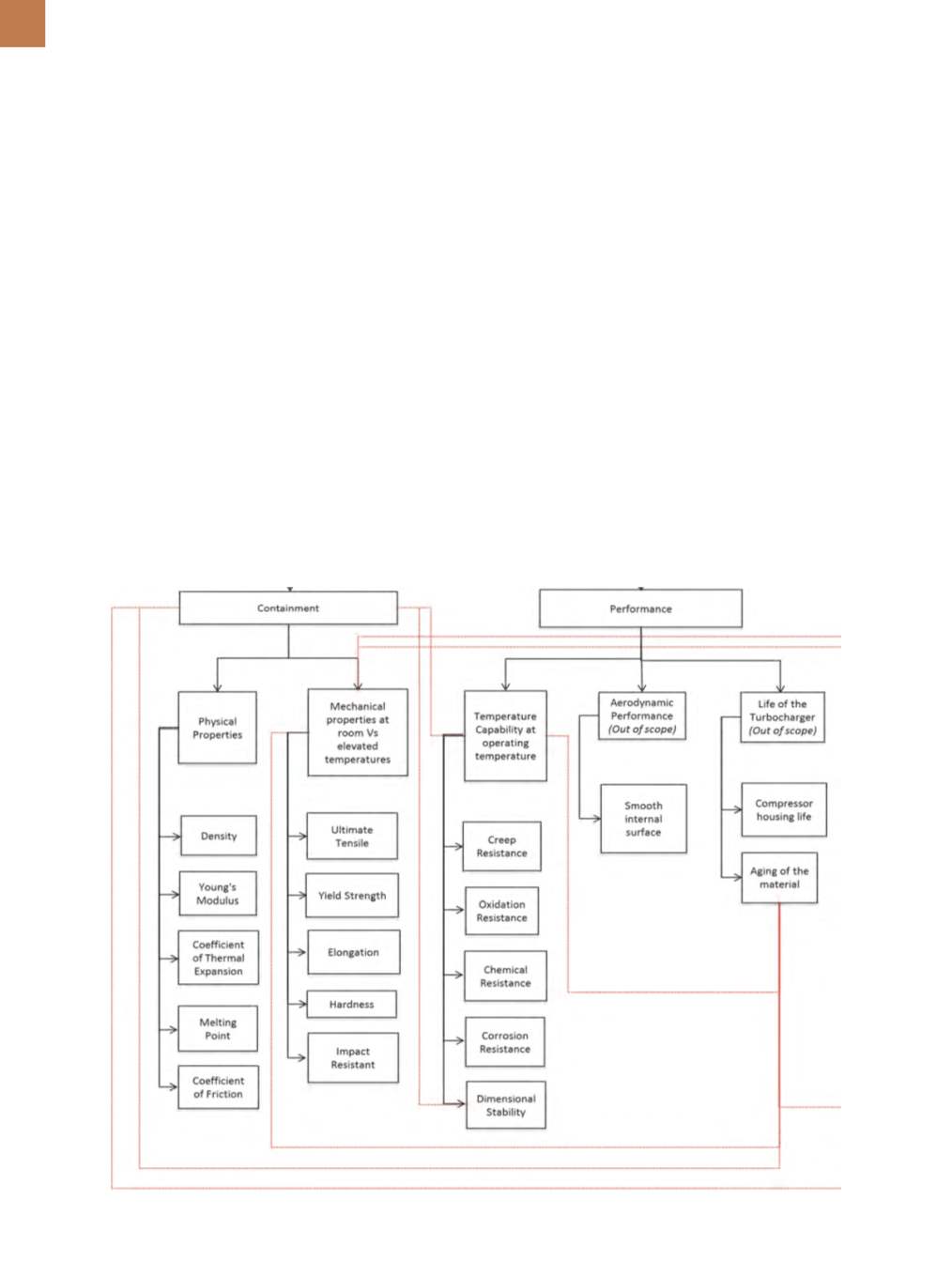
The top parameters on the CPT
indicate key requirements formulated
from VOC interviews. Second-level pa-
rameters are properties and aspects
associated with the material, process,
cost, and quality, which are key mea-
sures defined for the future materials
that enable comparing different ma-
terials. These measures are narrowed
down based on application require-
ments, which in turn are submitted
to suppliers as technical specification
requirements.
TECHNICAL SPECIFICATIONS
The technical specifications pre-
scribe component operating condi-
tions and performance requirements
to materials suppliers to help them
meet minimum property requirements
when selecting an alternative material
for the application or component. Non-
disclosure agreements are required
from suppliers before mutually sharing
information.
VOICE OF SUPPLIER (VOS)
A potential supplier list is creat-
ed from existing suppliers, purchasing
department suggestions, and inter-
net-based research. After submitting
a technical specification and request
for quotation (RFQ) to suppliers, VOS is
conducted to understand supplier ca-
pabilities to deliver a strong candidate
material(s) and correct manufacturing
process
[2]
. The technical specification
and CPT are used in interviewing and
capturing supplier voices and the ma-
terials they offer. The questionnaire
includes a purpose, objective, and in-
terview guide. The VOS document com-
pletely outlines each supplier’s capabil-
ity to provide the correct material, with
specific requirements including:
•• Material options and availability
•• Mechanical and physical properties
and service temperature capability
•• Material and manufacturing cost
•• Manufacturing options (manufac-
turing steps)
•• Production limits (e.g., design,
assembly, and component manu-
facturing)
•• Durability requirements (life of the
material)
Supplier interviews and input from
the supplier’s engineering departments
result in a list of material possibilities
for the component or application.
QUALITY FUNCTION
DEPLOYMENT (QFD)
The methodology of QFD
[4]
as a
tool for new product development is
useful in concept engineering. The QFD
exercise is aimed at understanding how
Fig. 2 −
Section of a critical parameter tree.