



 26 / 50

A D V A N C E D M A T E R I A L S & P R O C E S S E S | A P R I L 2 0 1 7
2 6
C
hamaecyparis obtusa,
a type of
cypress known as
hinoki
in its na-
tive Japan, is prized for the quality
of its wood. Since ancient times, hinoki
has been the preferred building materi-
al for architectural structures of all sizes,
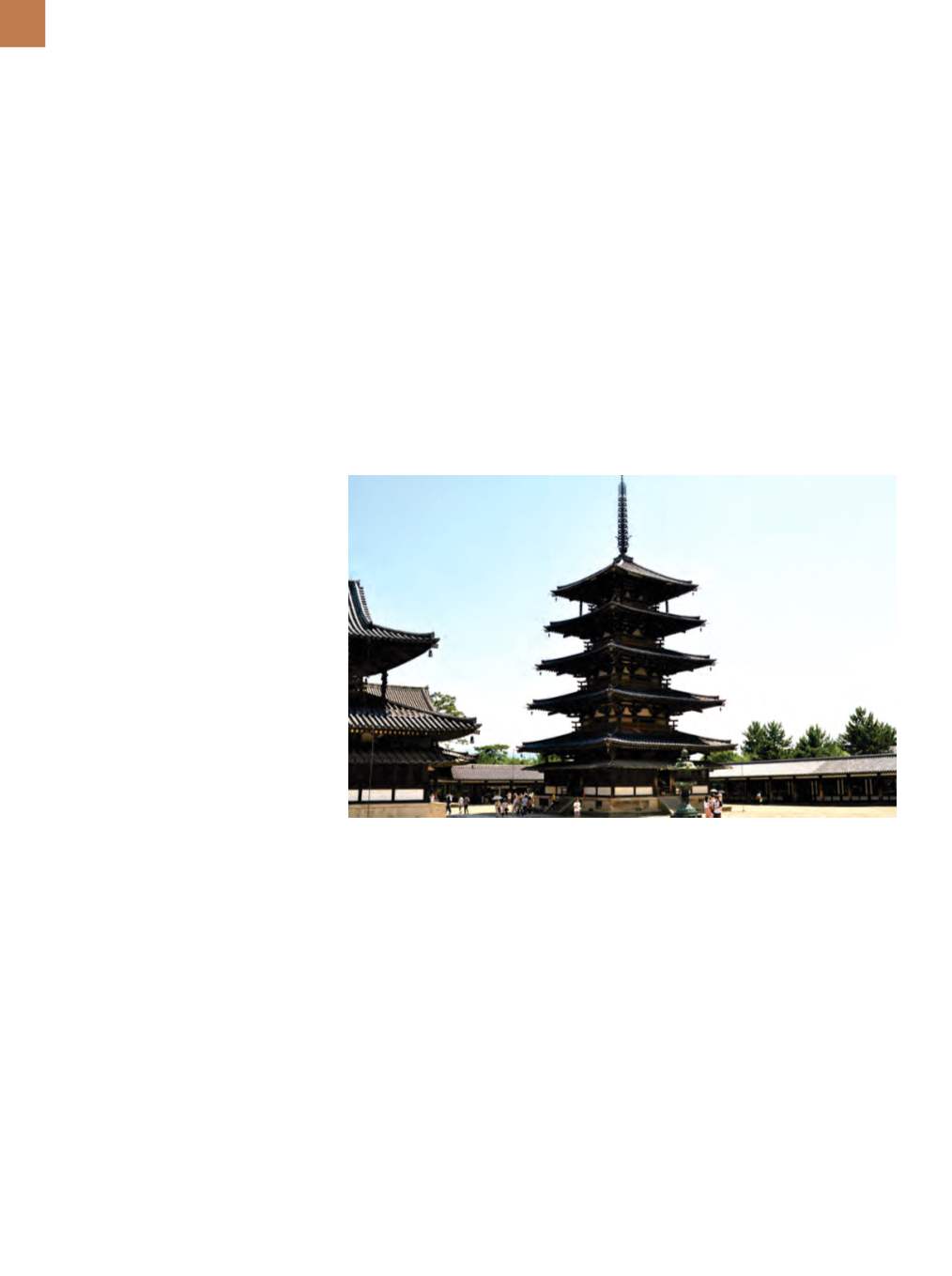
including the iconic pagodas in Nara, Ja-
pan, still standing after 1300 years. Hinoki
is naturally resistant to decay because
it contains aromatic compounds that
defend the wood—and anything near-
by—from insects, microorganisms, and
toxins. Russian biochemist Boris P. Tokin
spent decades in the early 1900s investi-
gating the nature of these fragrant plant-
based chemicals, for which he coined the
term
phytoncide,
meaning “exterminated
by the plant.” Researchers later deter-
mined that some of these compounds
are produced continuously without
provocation, while others, namely
phy-
toalexins,
are synthesized in response to
pathogenic attacks. What we now know
about phytoalexins may help explain hi-
noki’s extraordinary longevity: Studies
show these phytoalexins can puncture
the cell walls of invasivemicroorganisms,
disrupt their metabolism, and even pre-
vent reproduction.
ANTIBACTERIAL EFFECTS AND
KOHKIN
In Japan, where hinoki originates,
the term
Kohkin
can be used to de-
scribe the enduring protection provid-
ed by phytoalexins and phytoncides,
A NEW INTERNATIONAL
STANDARD FOR TESTING
ANTIBACTERIAL EFFECTS
Development of international antibacterial standards will greatly benefit societ
by helping industry produce goods with better antibacterial, anti-biofilm, an
anti-biofouling properties.
Hideyuki Kanematsu,* National Institute of Technology, Suzuka College, Mie, Japan
*Member of ASM International
particularly their antibacterial action.
It may also be used in a more techni-
cal sense in reference to the suppres-
sion and control of bacterial growth as
it applies to manufactured products.
Here, however, the term takes on a
much more specific meaning. Kohkin
is unique in that it does not require
the killing or complete elimination of
microorganisms as do other classifi-
cations of sanitization (Table 1). What
it implies is a more natural state of
balance between harmful and healthy
bacteria. For Japanese consumers, this
distinction has strong appeal and prod-
uct marketers have been quick to take
advantage of it.
Recognizing the potential for
abuse and a subsequent market cri-
sis, not to mention intractable prod-
uct liability issues, the Society of
International Sustaining Growth for An-
timicrobial Articles (SIAA) created an in-
ternational test standard, ISO 22196
[2]
,
Fig. 1
– The five-story pagoda on the grounds of the historic Horyuji Temple in Nara, Japan, is
among the oldest wooden structures in existence, dating back more than 1300 years. The resil-
ience of this ancient building lies in the material fromwhich it is constructed, a type of cypress
with a natural defense system that repels insects, withstands toxins, and keeps harmful bacteria
and fungi in check. Courtesy of Urabe Research Laboratory, Japan,
www.uraken.net.