



 17 / 54

ADVANCED MATERIALS & PROCESSES •
FEBRUARY 2014
17
neighboring strands and their surface roughness
and applied stresses.
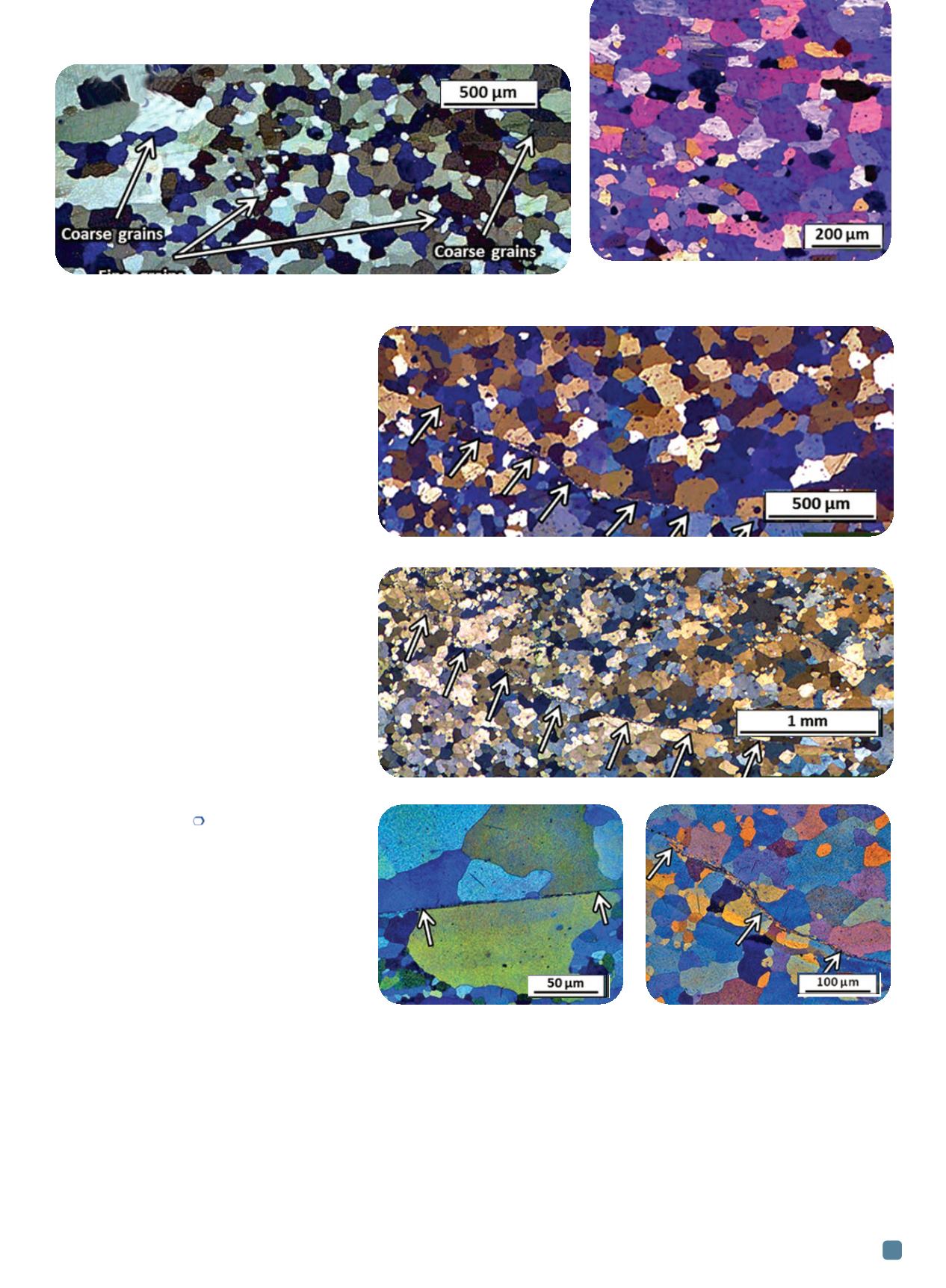
Figure 7 shows some coarse grains along the
extrusion weld lines. In contrast, necklacing of
small grains appears along the extrusion weld
lines in Fig. 8, which could represent newly re-
crystallized grains.
Conclusions
Three different samples representing vari-
ous extrusion weld locations of a hollow sec-
tion magnesium alloy AM30 extrudate were
investigated. The following microstructural fea-
tures were observed by using polarized LOM:
• Two types of extrusion welding were
observed—one without a weld line, which
indicates preferred extrusion welding, and
the other with a weld line, which could
represent a potential defect.
• Straight and tortuous weld lines occurred
at extrusion welding locations with coarse
and fine grains surrounding the weld line.
Further investigations are needed to learn
the material chemistry of the weld line. More
in-depth analysis will determine the nature of
the potentially recrystallized small grain
around the weld line.
Acknowledgements
Nabeel H. Alharthi would like to thank King Saud
University, Riyadh, Saudi Arabia, for financial sup-
port for his graduate studies at Lehigh University.
Partial support for Wojciech Z. Misiolek is pro-
vided by the Loewy Family Foundation through
the Loewy Professorship at Lehigh University.
This work was partially funded by the U.S. Coun-
cil for Automotive Research (contract 07-1864),
which had a cooperative agreement No. DE-
FC26-02OR22910 with the U.S. Department of
Energy (DOE). Such support does not constitute
an endorsement by the DOE of views expressed
herein. Timminco Inc., Denver, provided the ex-
trusions. The authors would like to express spe-
cial thanks to Samuel Lawrence, Joseph C. Sabol,
Anthony P. Ventura, and Arlan Benscoter for as-
sistance throughout this project.
For more information:
Nabeel H. Alharthi is a
Ph.D. candidate in theMechanical Engineering and
Mechanics Department and a research assistant at
the Institute for Metal Forming, Lehigh University,
5 E. Packer Ave., Bethlehem, PA 18015, 484/661-
0502,
nma208@lehigh.edu,
www.lehigh.edu.
References
1. Brian F. Gerard, Investigating Microstructural
Gradients and High Strain Rate Deformation
Mechanisms in Industrial MagnesiumAlloy Com-
ponents, M.S. Thesis, Lehigh University, May 2009.
Fig. 3 —
Polarized light optical microscopy (LOM) mosaic image of location (A) of the
extrudate.
Fig. 4 —
Fine grain structure as evidence of good
weld integrity in location (A) seen at higher
magnification than in Fig. 3.
Fig. 5 —
LOM mosaic image showing curved extrusion weld line in location (B).
Fig. 6 —
LOM mosaic image showing curved extrusion weld line in location (C).
Fig. 7 —
Straight extrusion weld line in
location (B).
Fig. 8 —
Tortuous extrusion weld line in
location (C).