


 40 / 62

iTSSe
TSS
A D V A N C E D M A T E R I A L S & P R O C E S S E S | F E B R U A R Y 2 0 1 6
4 0
iTSSe
TSS
10
CASE STUDY
MAGNESIUM REPAIR ON LIGHTWEIGHT
AEROSPACE COMPONENTS
REASON TO CONSIDER SURFACING
Magnesium components feature unique structural
strength combined with lightweight attributes. However,
these components are difficult to repair due to a heat-sensitive
corrosion reaction. “Magnesium alloys have been developed
that have good mechanical properties, low densities, can be
cast into complex shapes, and also feature good machining
characteristics. These characteristics make them ideal for
use in weight-critical applications, especially in helicopters,”
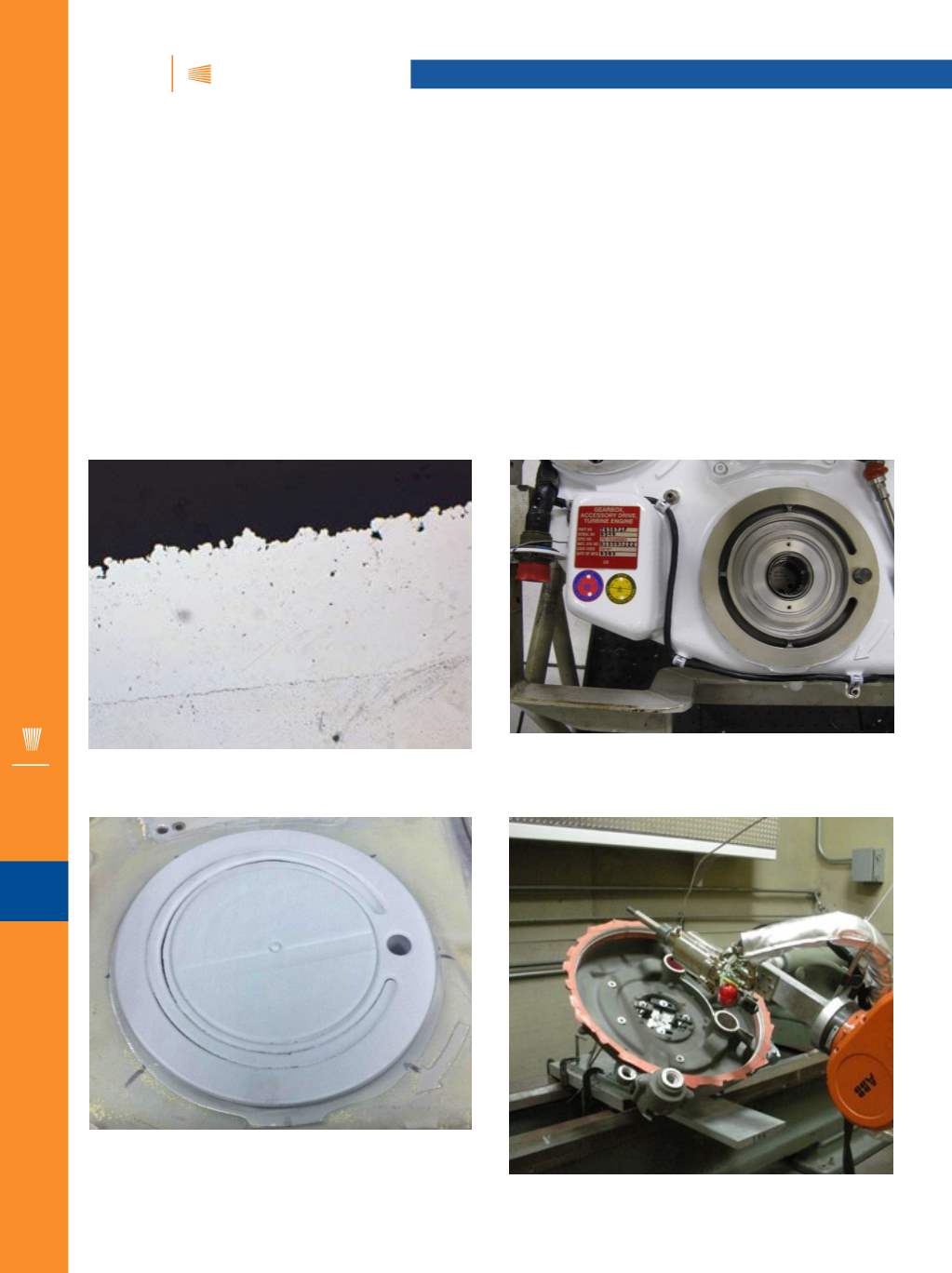
Fig. 1 —
Micrograph shows commercially pure aluminum applied
via high pressure cold spray.
Fig. 2 —
Hydraulic pump pad in the as-sprayed condition shows
the AA4047 coating. Courtesy of Applied Research Laboratory, Penn
State.
Fig. 3 —
Hydraulic pump pad after final machining of cold spray
repair. Transmission is fully assembled and resting in the engine test
stand. Courtesy of Applied Research Laboratory, Penn State.
Fig. 4 —
Aluminum repair on magnesium sump. Courtesy of ASB
Industries.
*Excerpt fromTimEden’s contribution to “High Pressure Cold Spray: Prin-
ciples and Applications,” a new book from ASM to be published in May.
explains Tim Eden, head of the Materials Processing Division,
Penn State Applied Research Laboratory.* “A disadvantage of
magnesium alloys is that they have a very high anodic index,
which means they are electrochemically active and very sus-
ceptible to galvanic corrosion when coupled to another metal.
Care must be taken to apply coatings that isolate the magne-
sium alloys from other metals and to create an environmental
barrier to prevent corrosion. Once the coating is damaged, cor-
rosion is initiated and quickly propagates.”