


 38 / 62

iTSSe
TSS
A D V A N C E D M A T E R I A L S & P R O C E S S E S | F E B R U A R Y 2 0 1 6
3 8
iTSSe
TSS
8
FEATURE ARTICLE
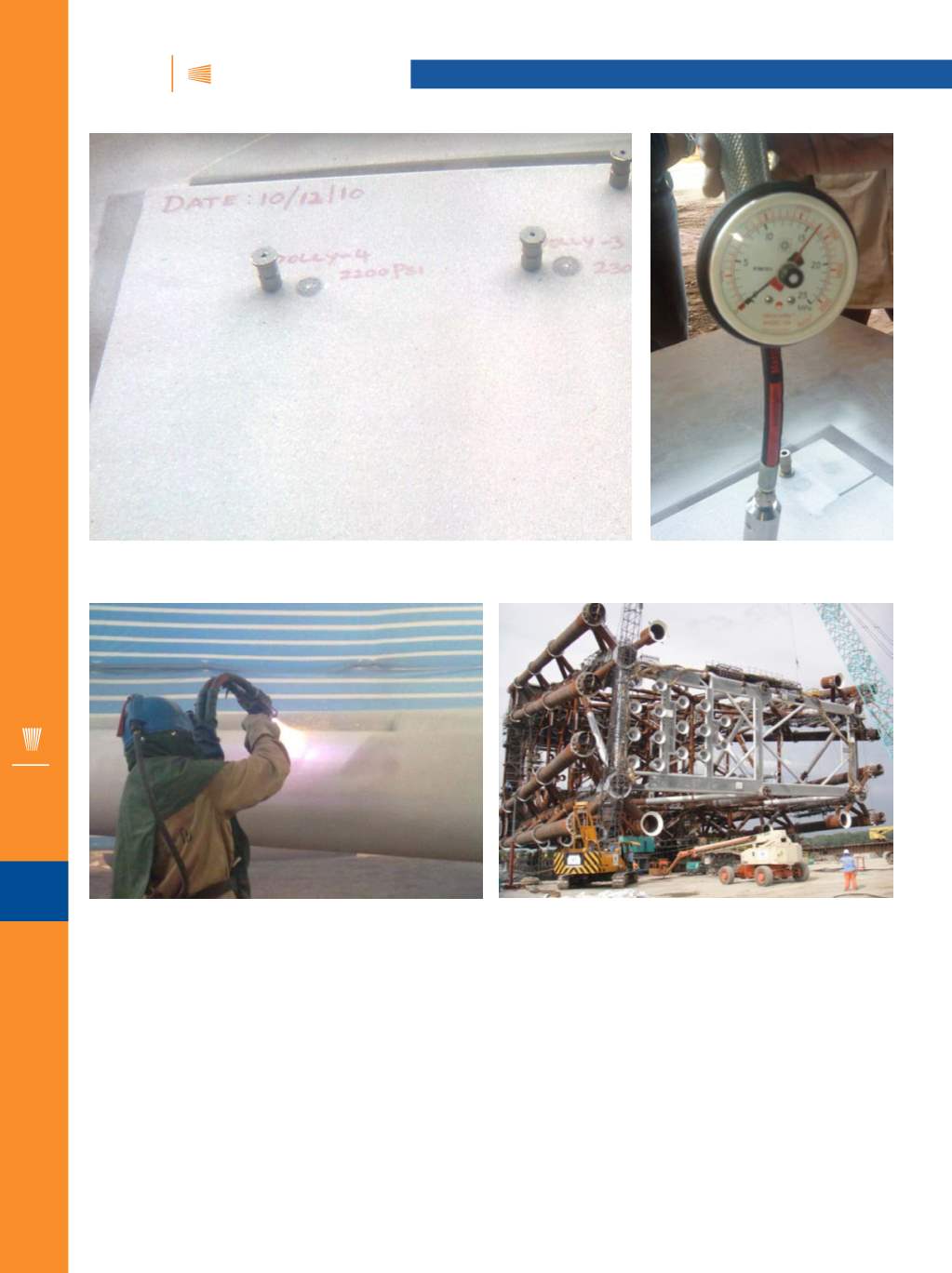
Fig. 5 —
From left to right, dollies pasted for adhesion bond strength test (ASTM D4541) and photograph indicating strength level on dial gauge.
Fig. 6 —
From left to right, TSAC application on actual job and completed job.
•
The structure was released for TSA coating after com-
plete fabrication and an inspection release note was
signed. After TSA coating, it was released for assembly.
•
Issues such as adhesion bond strength, surface prepara-
tion, dew point, and its impact on the project schedule
were taken care of during execution. Relative humidity
was a major constraint in achieving the desired bond
strength of 1500 psi for this job. An additional twin wire
electric arc thermal spray unit was mobilized to keep
production on track.
•
All safety requirements were closely monitored. Oper-
ators were allowed to work in rotation with maximum
two-hour shifts.
The coating process was performed in stages, with legs,
cross bracings, guide cones, and other parts at a minimum
rate of 100 m
2
per day, including surface preparation, coat-
ing, and sealer coat application. In spite of unpredictable
weather, all coating operations were completed well within
the schedule.