



 10 / 62

A D V A N C E D M A T E R I A L S & P R O C E S S E S | F E B R U A R Y 2 0 1 6
1 0
PROCESS TECHNOLOGY
goal is to provide power for NASA and
other missions. The new sample, which
is in the same oxide powder form used
to manufacture heat sources for power
systems, represents the first end-to-
end demonstration of a plutonium-238
production capability in the U.S. since
the Savannah River Plant in South Car-
olina ceased production in the 1980s.
Researchers will analyze the sample
for chemical purity and plutonium-238
content, verify production efficiency
models, and determine whether adjust-
ments need to be made before scaling
up the process.
“Once we automate and scale up
the process, the nation will have a long-
range capability to produce radioiso-
tope power systems such as those used
by NASA for deep space exploration,”
says project leader Bob Wham. The
success of Wham and a team of engi-
neers and technicians at ORNL comes
two years after NASA began funding the
DOE Office of Nuclear Energy through a
$15 million per year effort to revive the
department’s capability to make plu-
tonium-238. Initially, 300-400 grams of
the material will be produced annually.
After automation and scale-up are com-
plete, roughly 1.5 kg per year will be
made.
ornl.gov .PURIS PRINTS LARGEST
TITANIUM PART TO DATE
Puris LLC, Bruceton Mills, W.V., re-
ports that it recently achieved an im-
portant 3D printer milestone by print-
ing the largest complex titanium part
for commercial use to date. The part
was 3D-printed using binder jetting
technology and processed to 100%
density. It measures approximately
19 × 19 × 11 in. with a cross-section
thickness of 0.375-in. and weighs
roughly 31 lb. The part was produced
on an ExOne M-Print 3D printer for an
aerospace customer. The use of bind-
er jetting technology allowed Puris to
print the part at room temperature,
eliminating the residual stress buildup
inherent in other 3D printing technol-
ogies. Puris defines a “large part” as
one weighing 10 to 1000 pounds. The
company has previously printed large
parts using Inconel powder and is able
to print other high performance alloys
as well.
purisllc.com.
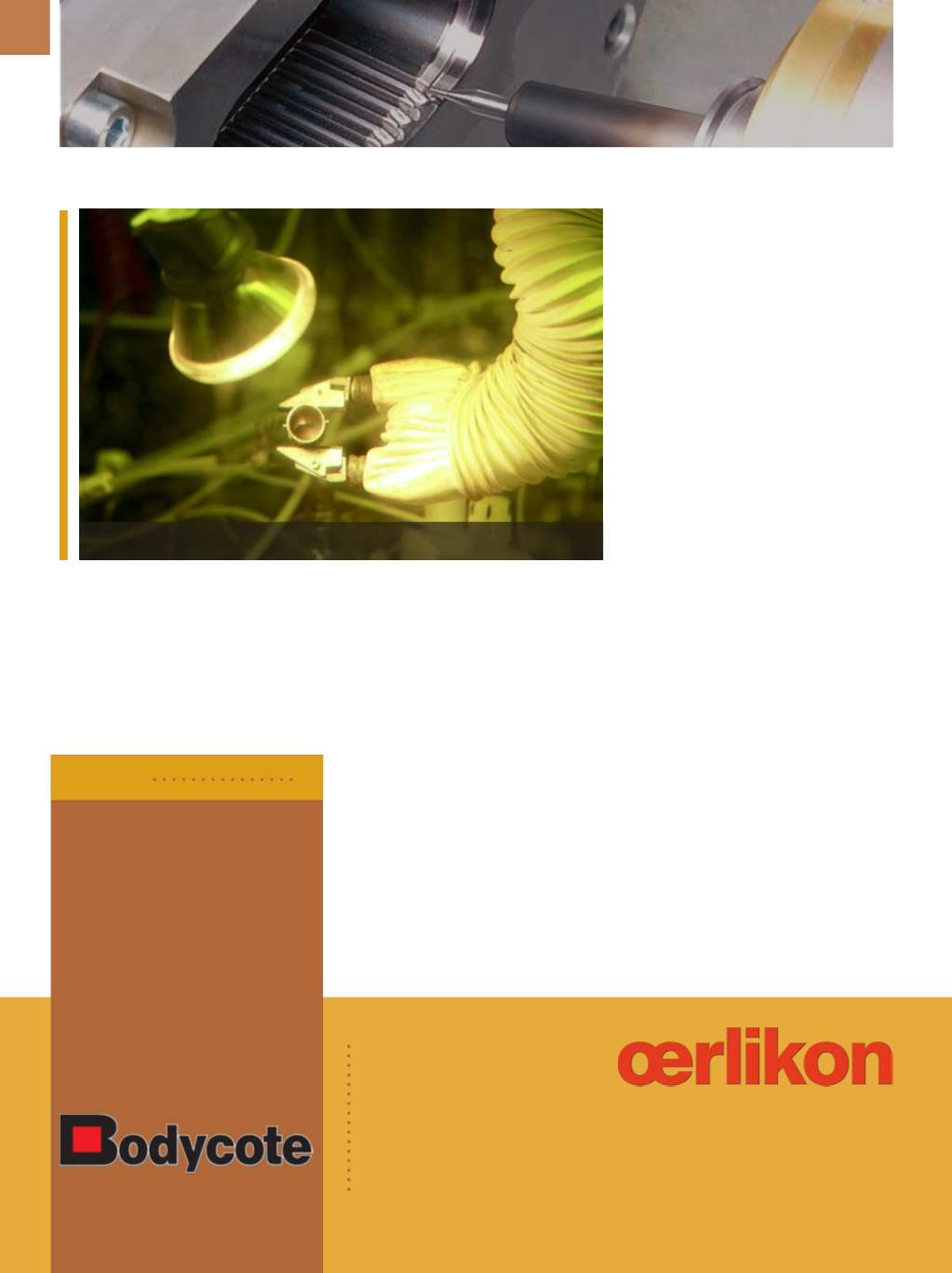
ORNL researchers recently produced 50 grams of plutonium-238.
PLUTONIUM-238 MAKES
A COMEBACK
Researchers at the DOE’s Oak
Ridge National Laboratory (ORNL),
Tenn., recently produced 50 grams of
plutonium-238—restoring a U.S. capa-
bility on hold for nearly 30 years. The
Bodycote,
UK, will open two new
heat treatment plants this year. In
Covington, Ga., a new plant will
open in spring to replace the near-
by Conyers facility. The new facility
will primarily serve automotive
and general industrial customers
in Georgia and Florida. In South
Carolina, a new Nadcap-accredited
facility will be established at Green-
ville to serve the region’s aerospace
manufacturing industry with heat
treating and brazing processes.
bodycote.com.
BRIEFS
Oerlikon,
Switzerland, acquired
Laser Cladding Services LLC,
Houston, a company specialized
in laser cladding applications for
the energy industry. The process uses a laser beam to deposit materials
and layers onto a substrate or fabricate near-net shape parts. The method
enables a full metallurgical bond to the base material, improving corro-
sion resistance and wear properties.
oerlikon.com.