



 26 / 62

A
dditive manufacturing (AM) continues to make
significant technology advancements and attract
widespread interest in industry, academia, and the
general media. However, the technology is likely still a
decade away from attaining meaningful implementation in
industry and has yet to find adoption in large-scale or part-
critical manufacturing operations, such as airframe struc-
tural component production. As a bridge technology that
takes advantage of existing manufacturing methods while
AM is being fully developed,
near-net manufacturing
is a
promising alternative. Near-net fills the gap between clas-
sic subtractive manufacturing and AM, and it may be accu-
rately described in terms of grain size.
In any AM technology, parts are built by using an en-
ergy source (laser, electron beam) to join or fuse a large
number of uniformly shaped items to each other. The
process is repeated layer-by-layer until a part is con-
structed. For the purposes of this article, “grain size” refers
to the size of the items used to build the part. As an exam-
ple, consider
laser sintering
. In this 3D printing process, a
computer is loaded with a 3D CAD file of the part to be
made. The computer directs the laser to move around on
the surface of the powdered material, while powder grains
fuse together and harden once the laser moves on. Each
time the laser traces the powder, the hardened material is
lowered incrementally. Over time and many layers, the
hardened material creates a complete part. In this case, the
grain size of the particles being fused is orders of magni-
tude smaller than the part being created, even for small
parts. Parts made this way are considered to have been
built with 100% additive manufacturing.
At the other end of the spectrum are parts made with
100% subtractive manufacturing. The term
subtractive man-
ufacturing
is used to describe a process where the material
used tomake the part is about the same size as the part being
made, a traditional method used for many decades. In gen-
eral, subtractive manufacturing is most suitable when the
part’s overall size, tensile strength, fatigue performance, or
some other physical performance criteria demands that
parts be made from billet or forgings. Aerospace structural
components are a classic example.
In many aerospace applications, due to weight and size
restrictions,
parts must
perform near
the
physical
limits of the ma-
terials used to
make them. Fin-
ished parts must
be uniform, reli-
able, and meet
well defined per-
formance specifications. Parts also must be as compact and
light as possible. Many aerospace parts are manufactured
from blocks of titanium, stainless steel, or other alloys
and then machined away to achieve the final part shape.
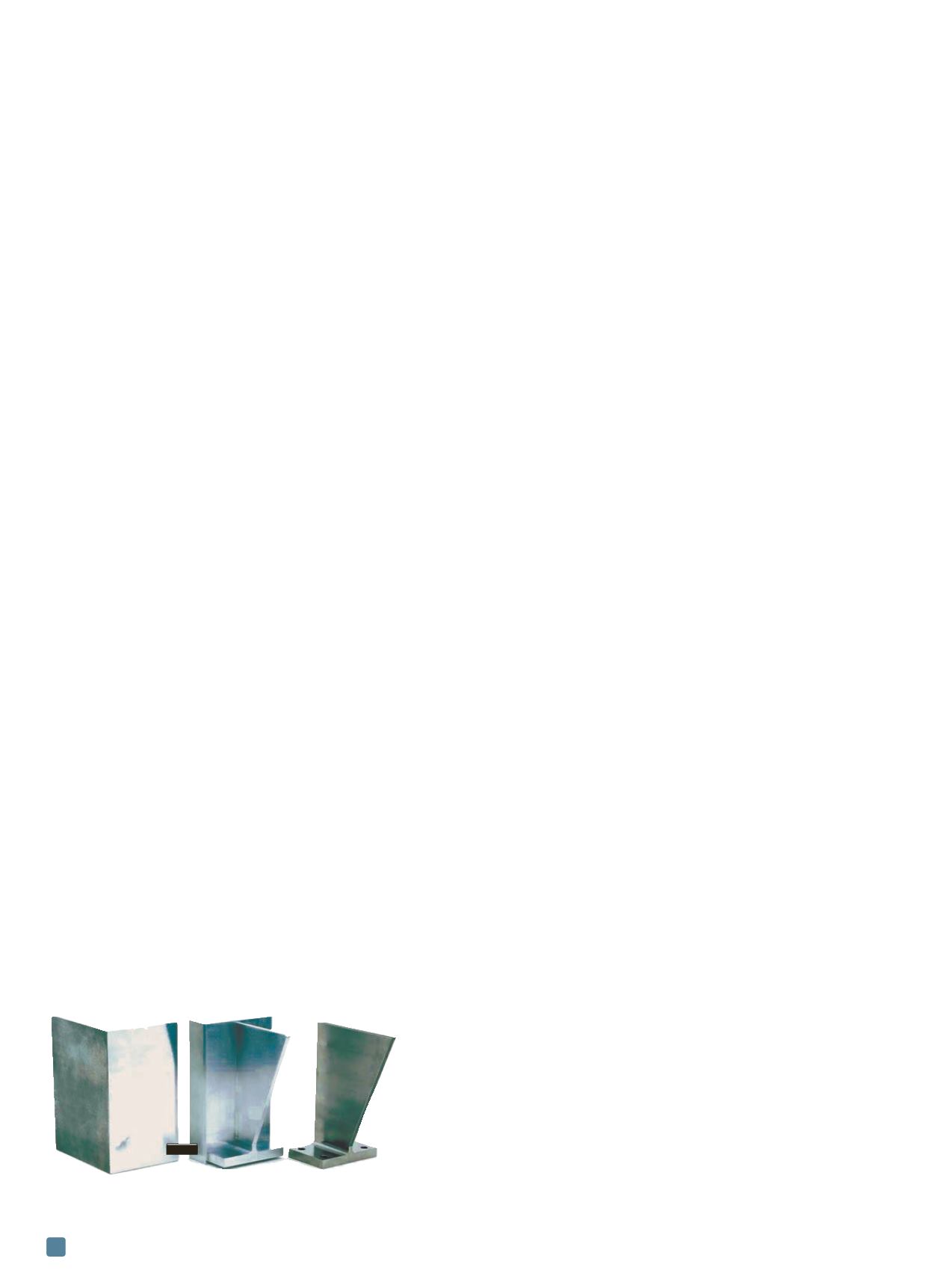
Figure 1 is an example of how an aerospace part is manu-
factured today, with much of the material removed to cre-
ate the final part.
This method is known as “hogging out a part” and is
the reason the aerospace industry talks about
buy-to-fly ra-
tios—
how many pounds of a particular material one must
buy to end up with one pound that makes it into the air.
Specific buy-to-fly ratios are extremely proprietary and ac-
tual ratios for existing parts are closely guarded secrets, but
aerospace companies routinely talk about ratios of between
10 and 20 being common. While buy-to-fly ratios allude to
the high material cost associated with subtractive manu-
facturing, the ratio ignores the other cost—manpower. It
takes a lot of time by a skilled machinist to whittle a part
out of a solid block of titanium and wastes a significant
amount of material. Yet many reasons remain with regard
to the continued use of subtractive methods. Figure 2 il-
lustrates how grain size is related to both additive and sub-
tractive manufacturing processes.
The two main reasons that AM is not yet widely imple-
mented both relate to grain size. First, a huge number of
grains must be fused together to make even a small part,
which takes a relatively long time compared to traditional
machining methods. Second, it is difficult to control the
mechanical properties of fused particles—much less the
entire part—with existing technologies. Companies, uni-
versities, and research organizations are making great
strides to overcome these issues and ultimately will suc-
ceed. Today, however, these and a few other smaller issues
are keeping AM from being used to any great extent in the
manufacturing industry. Compared to AM, subtractive
manufacturing is incredibly wasteful and costly but it pro-
vides a well-established, reliable, and accepted way to pro-
duce high quality, high strength parts. As a bridge
technology between these two methods, near-net manu-
facturing must be considered.
Near-net manufacturing
Near-net fills the middle ground of grain size between
100% additive and 100% subtractive manufacturing (Fig. 2).
With near-net manufacturing, companies can gain some of
the benefits of AMwithout having to give up the speed and
mechanical properties available from subtractive methods.
As its name implies, near-net manufacturing means creating
a form that approximates the shape of the final part. This is
accomplished by joining relatively large components (large
grains) of a desired alloy, like titanium, in such a way that
the material’s physical properties are retained. Figure 3 illus-
trates the concept of near-net manufacturing.
ADVANCED MATERIALS & PROCESSES •
AUGUST 2014
26
TECHNICAL SPOTLIGHT
Linear Friction Welding Enables
Near-Net Manufacturing
Fig. 1 —
Traditional subtractive manufacturing used to
make an aerospace part. Courtesy of TWI Ltd.
25 mm