


 39 / 58

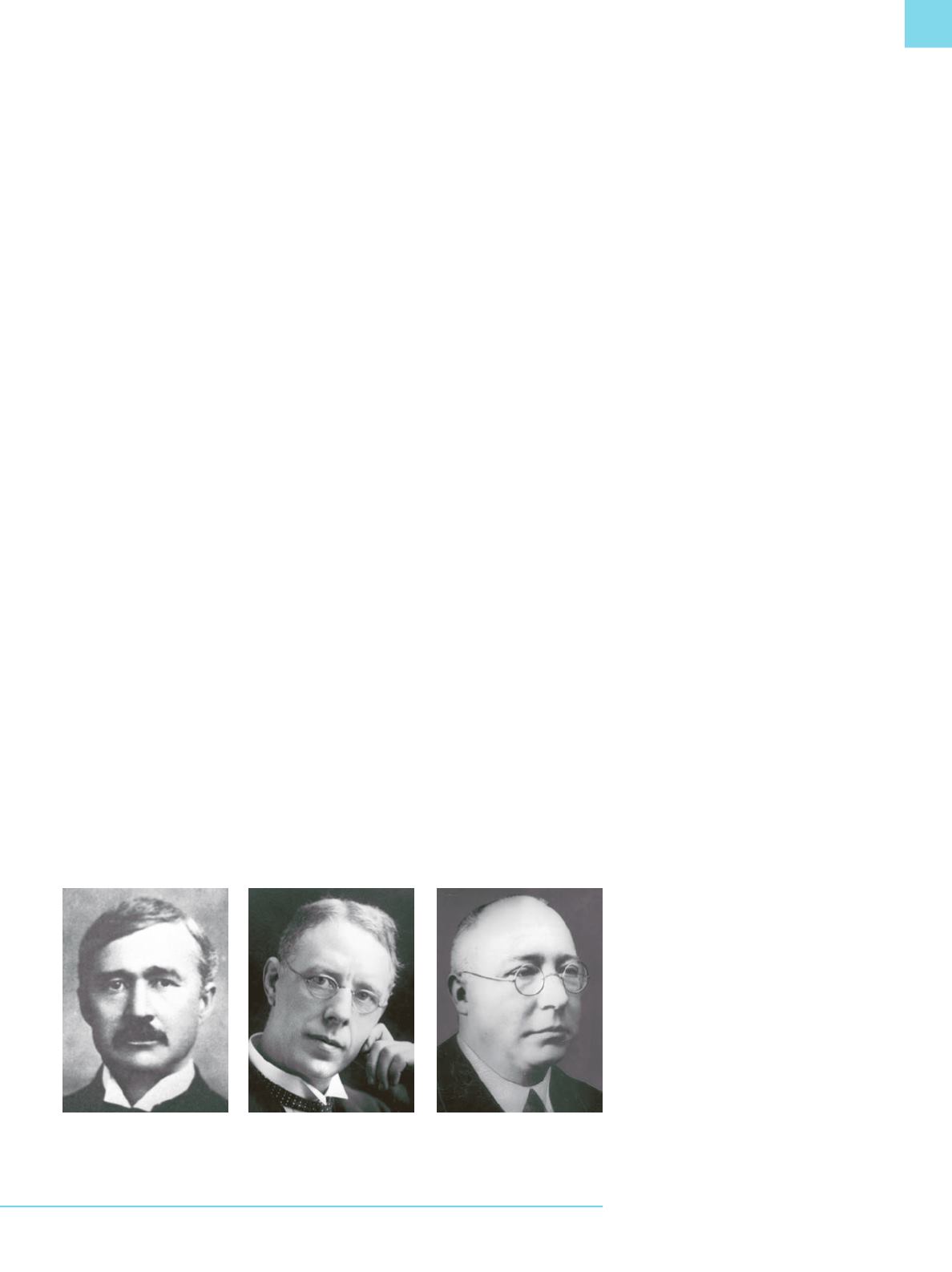
Elwood Haynes invented
martensitic stainless steel
with 13% chromium and
0.30% carbon.
Harry Brearley launched
the production of
martensitic stainless for
cutlery and tableware.
Eduard Maurer patented
the first austenitic
stainless steel in 1912.
A D V A N C E D
M A T E R I A L S
&
P R O C E S S E S | J A N U A R Y
2 0 1 5
3 9
determined that when the chromium
content exceeded 12%, the steel resisted
attack by nitric acid and did not corrode
in the normal atmosphere. Next, he found
that the metal surface needed to be
prepared to form a protective film. This
extremely thin film was the formation of
an oxide with a combination of iron and
chromium when the chromium exceeded
12%. The tightly adherent film prevented
further oxidation or corrosion.
He also found that low carbon content
is necessary to prevent formation of
chromium carbides and that carbon
can be controlled by adding stronger
carbide formers, such as titanium,
columbium, vanadium, molybdenum,
or tungsten to form carbides of these
alloys rather than of chromium. Finally,
Monnartz learned that the addition of
2% to 3%molybdenum greatly increased
the corrosion resistance of austenitic
stainless. His research provided the basic
information for all future developments in
practical alloys for the many applications
that would develop for stainless steel.
For his discovery, Monnartzmust be
considered theone true inventor of stainless
steel.While theother researchers, especially
Guillet, were thepioneers of iron-chromium
and iron-chromium-nickel steels, they
completelymissed theonlyproperty that
makes thesealloys useful today. Themystery
is this: Howdid theynot notice that some
of their alloyswere sodifficult toetch for
metallographic examination? As Zapffe
quipped, “It’s not surprising that it took so
long todiscover stainless steel.What’s
surprising is that itwasn’t discovered sooner.”
STAINLESS STEEL
APPLICATIONS ABOUND
The years from 1904 to 1911 were a major
discovery period, while the following
decade witnessed development of
alloys for specific applications. The first
patent for a stainless steel alloy was
German #246015, issued in 1910 to W.
Borchers and P. Monnartz, although the
first application for stainless steel was
for lead-in wires for electric lamp bulbs.
The research was done by Christian
Dantsizen at the General Electric Research
Laboratories in Schenectady, N.Y. Using
very low-carbon chromiummade by the
Goldschmidt thermite process, he
developed an alloy containing 14% to
15% chromium and 0.07% to 0.15%
carbon. His goal was resistance to
oxidation at high temperature and
the chromium provided that in a
ferritic microstructure. GE would use
this alloy a few years later for steam
turbine blades.
Another American, Elwood Haynes,
worked on stainless steel with a higher
carbon content to produce a martensitic
microstructure upon quenching from
a high temperature. Haynes was an
automobile manufacturer with an interest
in developing alloys for spark plugs. He
had already invented Stellite, a cobalt-
chromium-tungsten-carbon alloy used to
make hard and wear-resistant surfaces,
such as valve seats. He applied for a
patent in 1911 on a stainless steel alloy
that contained 13% chromium with 0.30%
carbon, but it was held up for many years
due to interference with a British patent.
The British patent was held by Harry
Brearley who had been searching for a
wear and corrosion-resistant alloy for gun
barrels. This led him to a 13% chromium,
0.25% carbon hardenable stainless steel. He
promoted his alloy—the forerunner of AISI
420—for cutlery. It was a natural application
for hardened knives and his employers
were in Sheffield, UK, the capital of tool
and knifemaking. Brearley is credited with
starting the first production of hardenable
stainless. The Britishmilitary found that
Brearley’s alloy was the answer for aircraft
engine exhaust valves and requisitioned the
available supply for the years 1914-1919.
Thomas Firth and Sons made 50 tons for
knives before the war, a production lot
considered to be the dawn of the stainless
steel industry.
One of the most important patents
issued for stainless steel went to Eduard
Maurer and Benno Strauss working at
the Friedrich Krupp Works in Essen,
Germany. Their German patent #304159
issued in 1912 included, for the first time,
austenitic stainless steel. One of their
alloys contained 20% chromium and 7%
nickel. With slight modification, this alloy
became 18-8, the single most important
stainless steel alloy ever produced.
For more information:
Charles R.
Simcoe can be reached at
crsimcoe1@ gmail.com.For more metallurgical history,
visit
metals-history.blogspot.com.“IT’SNOT SURPRISING
THAT IT TOOKSO
LONG TODISCOVER
STAINLESS STEEL.
WHAT’S SURPRISING
IS THAT ITWASN’T
DISCOVEREDSOONER.”