


 61 / 70

HIGHL IGHTS
A D V A N C E D
M A T E R I A L S
&
P R O C E S S E S | J U L Y / A U G U S T
2 0 1 5
6 1
AUTHOR SPOTLIGHT
AUTHOR SPOTLIGHT
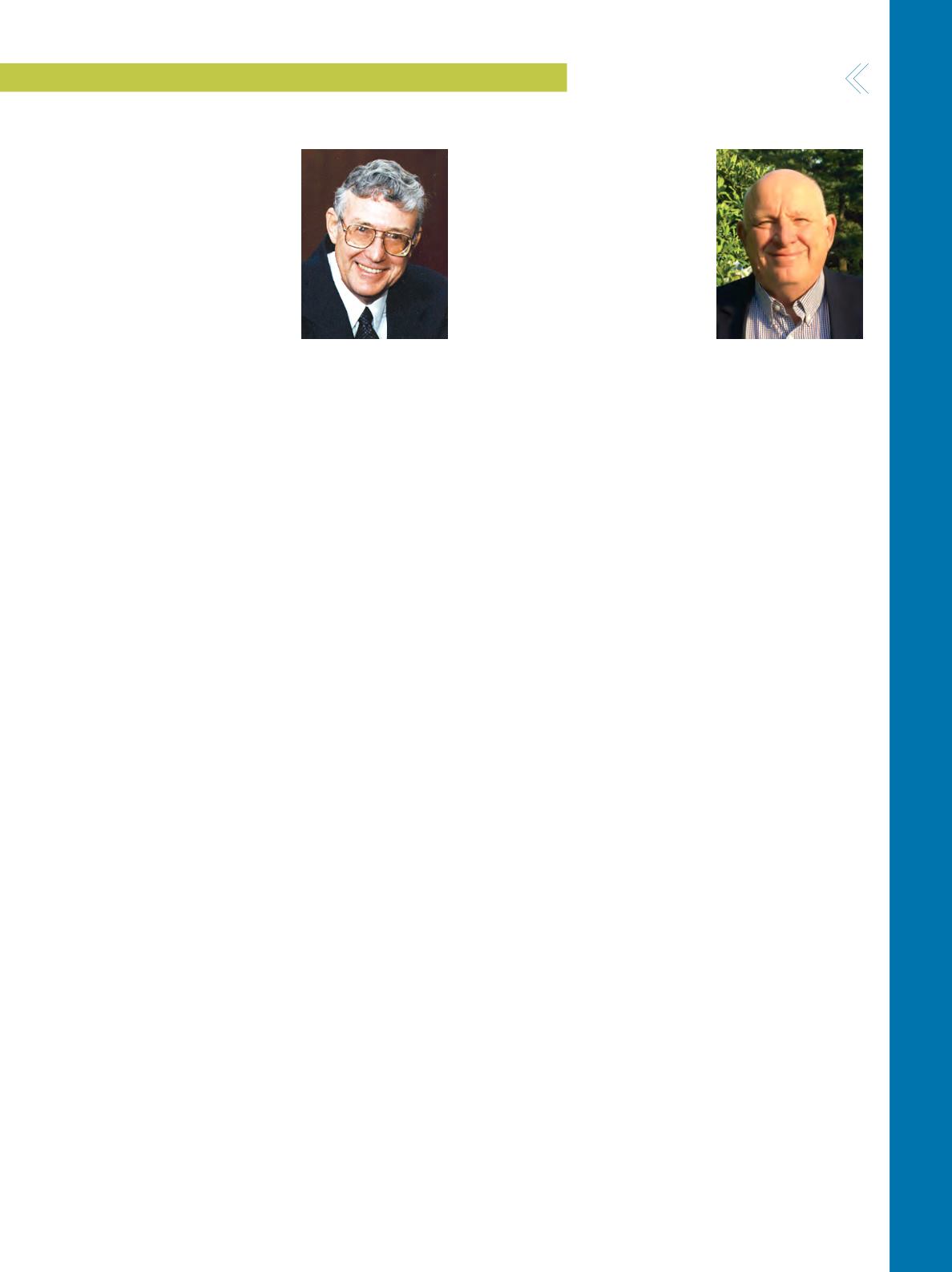
George Krauss
George Krauss, FASM, pub-
lished his second edition of
STEELS
:
Processing, Structure, and
Performance
with ASM in March.
The volume is an up-to-date de-
scription of state-of-the-art phys-
ical metallurgy of steel. Krauss
explains, “Text comes from a half
century in understanding steel, learning from others in in-
dustry and universities, step-by-step discoveries with my
students and colleagues, and participation in the interna-
tional materials community specializing in steel. The key
with
STEELS
,
Second Edition
is understanding microstruc-
ture as influenced by chemistry and processing, including
steelmaking, mechanical and thermal processing, and sur-
face heat treatment, and relating that structure to perfor-
mance. These considerations have been updated in almost
every chapter of the second edition and help to provide the
basis for new discoveries and applications.”
Krauss is currently University Emeritus Professor at the
Colorado School of Mines and a metallurgical consultant
specializing in steel microstructural systems. In addition
to
STEELS
, he coauthored the book
Tool Steels, Fifth Edition
with ASM and has published over 300 papers and lectured
widely in technical conferences, universities, corporations,
and ASM chapters, including a number of keynote, invited,
and honorary lectures.
Krauss also served as president of the Internation-
al Federation of Heat Treatment and Surface Engineering
(IFHTSE) and is a past president of ASM. He is a Fellow of
ASM, TMS, and IFHTSE. Krauss has been awarded medals
from numerous organizations including the Adolf Martens
Medal of the German Society for Heat Treatment and Mate-
rials and has received several other professional and teach-
ing awards, including the ASM Albert Easton White Distin-
guished Teacher Award. He dedicates the new edition to the
“men and women that make, use, and study steel.”
VOLUNTEERISM COMMITTEE
Profile of a Volunteer
Steve Brubaker
A young materials engineering graduate left the Uni-
versity of Cincinnati for Brazil in 1969 with the Peace Corps—
and brought back a lifelong lesson in developing communi-
ties. Steve Brubaker now shares that with ASM, as education
outreach volunteer in Delaware’s Brandywine Valley Chap-
ter. Brubaker joined ASM in 1974, but during his 29-year ca-
reer as a materials consultant with DuPont he focused on
raising a family and growing his skills. It wasn’t until he was
in his 60s that he became an active member on the exec-
utive board. He was invited by Art
Graham, a retired DuPont Ph.D.
with expertise in surface engineer-
ing. “Art was a real inspiration. It
was important to him to rescue a
near-dormant chapter,” says Bru-
baker. “He demonstrated that a
chapter is totally dependent on
volunteers. He was in his 70s and
retired, and when he had to back
off, I stepped up along with the
rest of the executive committee.”
Brubaker’s retirement years have been “healthy and in-
vigorated” by working with ASM. He worked to build a stron-
ger affiliation with the University of Delaware’s department
of materials engineering, including sponsorship of graduate
student poster sessions and a successful Teachers Camp.
Looking back, he reflects, “I became Chair in 2010 and
thought it would be too much stress when I retired, but a
strong and motivated executive committee practically runs
itself.” The chapter has grown from a base of 130 members
to more than 180 and now includes a Materials Advantage
chapter at the University, graduates of the Teachers Camp,
and a
Metallurgy for the Non-Metallurgist
course.
Brubaker’s advice for a vital chapter:
1. Invite older members and retirees to get involved.
2. Strive for excellent programming with fun planning
meetings.
3. Provide valuable professional development to attract
volunteers.
“Everything is an opportunity,” he says. “But it only
happens when people get together and motivate each
other!”
Materials Genome Toolkit Competition
Winners Announced
ASM’s Computational Materials Data Network (CMD
Network) is pleased to announce the winners of the 2015
ASM Materials Genome Toolkit competition. Six engineering
schools—University of Maryland, Michigan Tech, Cal-Poly
Pomona, Carnegie Mellon, Virginia Tech, and Alfred Univer-
sity—were selected by a review committee to receive state-
of-the-art materials modeling software for use in under-
graduate education and enrichment. The winning schools
will be recognized at MS&T15, taking place October 4-8 in
Columbus, Ohio.
Schools were required to submit a proposal stating
how they planned to integrate the software into their under-
graduate curriculum and how they would use it in the con-
text of the ASMUndergraduate Design Competition. Winners
were chosen based on howwell their proposal balanced the
use of the software between theory and application. Each
Brubaker