


 51 / 54

ADVANCED MATERIALS & PROCESSES •
FEBRUARY 2014
51
Dyed leaf diet yields colored silk
Cultivated silkworms have been spinning
luxurious white silk fibers for use in clothing for
thousands of years. Current dyeing practices
produce wastewater with potentially harmful toxins,
so scientists are turning to a new, “greener” dyeing
method in which they coax already-colored fibers
from the caterpillars by feeding them dyed leaves.
Researchers dipped or sprayed mulberry leaves,
the silkworm’s food of choice, with azo dyes to see
which ones, when consumed, would transfer to the
silk. Of the seven dyes they tested, three were
incorporated into the caterpillars’ silk, and none
seemed to affect the worms’ growth. Scientists
noticed that certain dye traits, such as the ability to
dissolve in water, affected how well the dye worked.
“These insights are extremely important in
development of novel dye molecules that can be
successfully used in this green method of producing
colored silk fabrics,” say researchers
.
www.acs.org.
Building better bricks with beer
Eduardo Ferraz and colleagues at the Polytechnic Institute of Tomar,
Portugal, are mixing brewery grains into clay bricks to enhance their
ability to trap heat without compromising strength. With a clay paste
containing 5% spent grains, they created bricks as strong as
conventional ones, while reducing heat loss by 28%. The grains make
the bricks more porous so they trap more air, which increases heat
retention. One downfall of the process is the smell. Bill Daidone of the
Acme Brick Co., Fort Worth, Tex., says his lab abandoned experiments
because the stench of the moist grains was overpowering. However,
this problem vanishes once the bricks are fired, says Ferraz. Bricks that
provide insulation without
sacrificing strength could be a
big boost to the construction
industry, according to John
Sanders, a scientist at the
National Brick Research Center
at Clemson University, S.C.
http://portal.ipt.pt/portal/ portal/international.Researchers mix brewery grains
into clay bricks to enhance their
ability to trap heat without
compromising strength.
What’s the frizz about:
New method indexes bad hair days
Beauty experts at Dow Corning, Midland, Mich., developed
a verifiable Frizz Index testing method that quantifies hair’s
frizziness independently of its volume. It represents a
breakthrough that gives hair care manufacturers a tool to
describe hair tress shape and appearance in a more accurate
way, allowing them to formulate new products that will
effectively tame frizzy, flyaway hair. “Dozens of frizz control products
on store shelves tout their ability to tame unruly hair without unwanted
side effects like influencing hair volume or leaving hair feeling greasy or
crispy,” explains Sylvie Bouzéloc, Hair Care application designer. “Until
now, manufacturers never had a way to prove a product’s ability to
deliver on those claims apart from testing the product’s effect on
volume. Our new Frizz Index will give them a way to demonstrate
product performance to their consumers.”
www.dowcorning.com/personalcare.A verifiable Frizz Index testing method that quantifies hair’s frizziness
independently of its volume was developed by Dow Corning researchers.
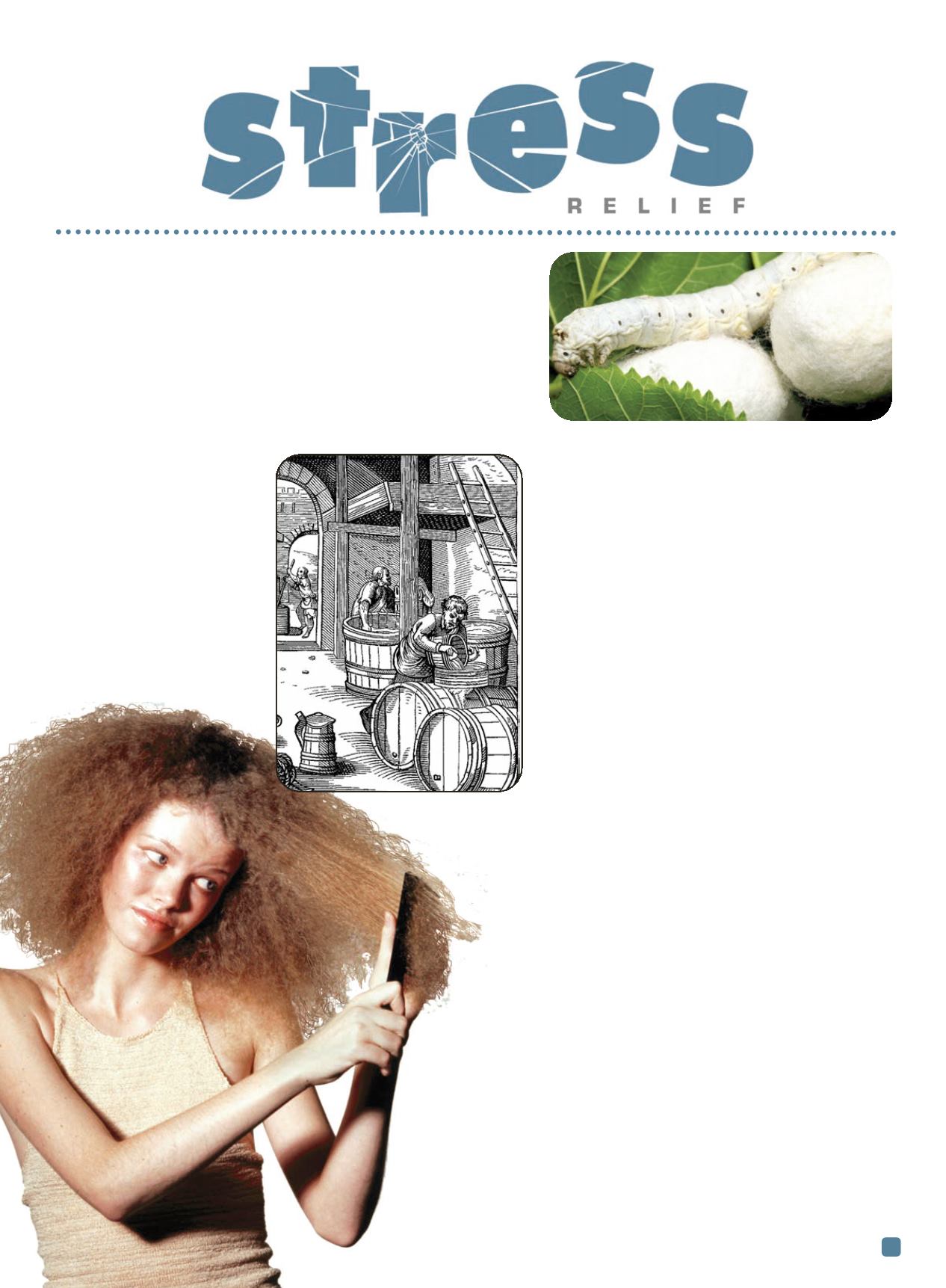
A new, “greener” dyeing method coaxes already-colored
fibers from caterpillars by feeding them dyed leaves.
Photo by Shutterstock.